Liver Detox for Fatty Liver: The Ultimate Medical Guide
Updated for 2026 Hepatology Standards | Evidence-Based | 15 Min Read
Let us address the most persistent misconception in modern wellness: a liver detox is not a 3-day juice cleanse. It is a complex, continuous metabolic process regulated by your hepatic pathways. Yet, with global MASLD (Metabolic Dysfunction-Associated Steatotic Liver Disease) cases rising sharply in 2026, more adults are searching for safe, science-backed methods to detox your liver and reverse early-stage fat accumulation.
The Problem: Chronic exposure to ultra-processed foods, environmental endocrine disruptors, and sedentary lifestyles overwhelm your natural detoxification process. This leads to lipotoxicity, insulin resistance, and impaired liver function.
The Promise: This guide strips away the marketing hype. We will explore the real science behind Phase I and Phase II hepatic pathways, provide actionable nutritional protocols, and outline a structured, safe approach to natural detox that aligns with current clinical research.
Understanding Fatty Liver (MASLD) and How Detoxification Works
Your liver processes over 500 biological functions daily, with detoxification at the core. This occurs through two primary pathways:
- Phase I (Cytochrome P450): Fat-soluble toxins are broken down into intermediate compounds. This process generates free radicals, requiring robust antioxidant support.
- Phase II (Conjugation): These intermediates bind to molecules like glutathione, sulfate, or glycine, transforming them into water-soluble waste excreted via bile or urine.
When excess triglycerides accumulate in hepatocytes (liver cells), it triggers hepatic steatosis. This fat burden slows bile acid secretion, disrupts insulin sensitivity, and creates oxidative stress that stalls Phase II conjugation. Understanding this metabolic bottleneck is the foundation of any effective liver cleanse.
In short: Supporting your liver requires reducing toxic load, optimizing glutathione synthesis, and restoring metabolic flexibility, not extreme fasting or restrictive juice diets. For a deeper breakdown of hepatic pathways, visit our About page.
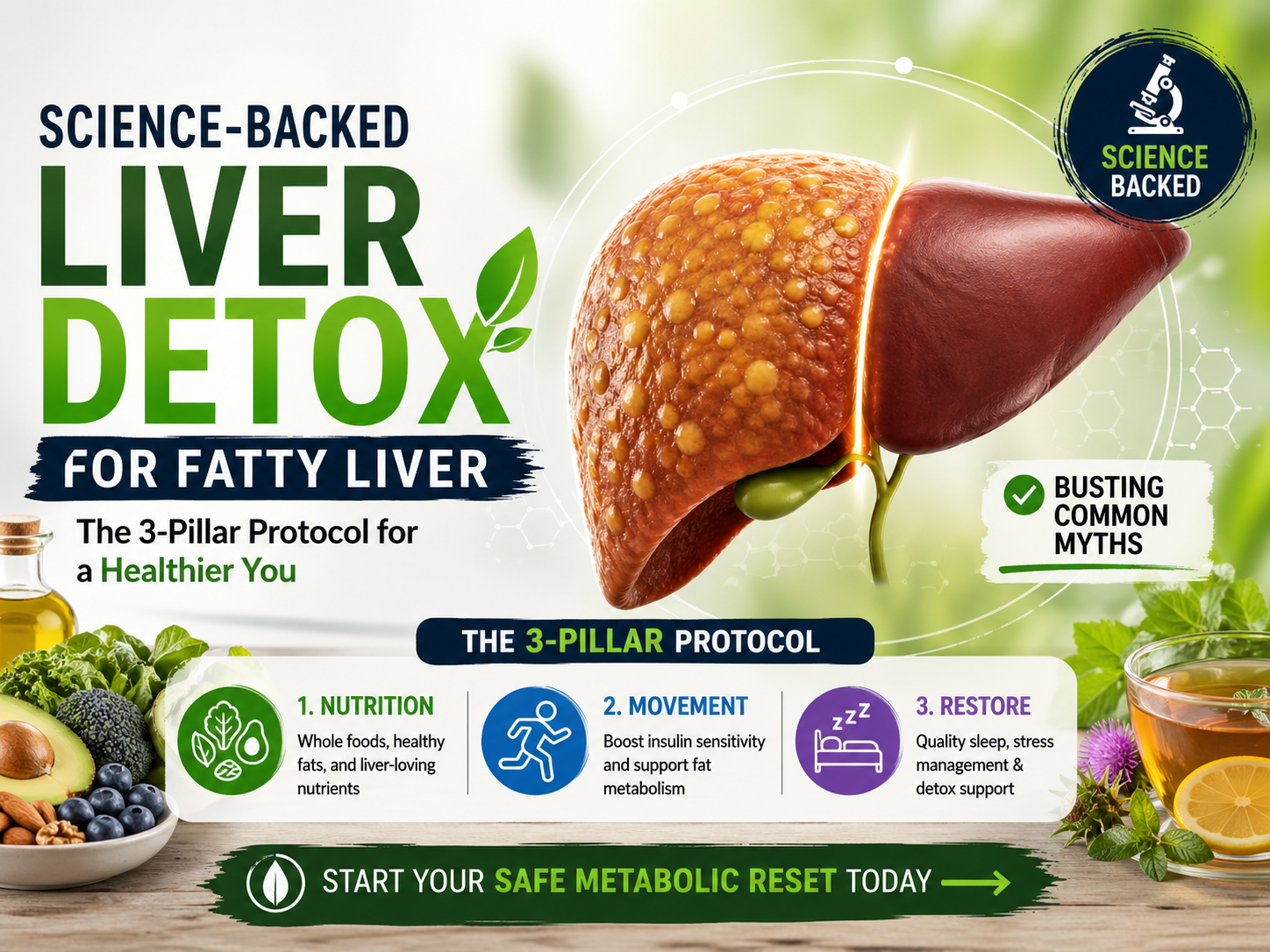
The 3-Pillar Protocol for Liver Detoxification
1. Nutritional Intervention (Keto-Med Hybrid)
The most clinically validated dietary approach for reducing hepatic fat combines the low-glycemic principles of the Mediterranean diet with targeted carbohydrate restriction. This hybrid minimizes insulin spikes while providing essential micronutrients for Phase II detox.
- Cruciferous Vegetables: Broccoli, Brussels sprouts, and kale contain sulforaphane, which directly upregulates Nrf2 pathways, boosting Phase II enzyme production.
- Low-Glycemic Fiber: Oats, chia seeds, and legumes bind to bile acids, encouraging the liver to use stored cholesterol for new bile synthesis.
- Healthy Fats: Omega-3 fatty acids from wild-caught fish and olive oil reduce hepatic inflammation and improve lipid profiles.
Explore our comprehensive list of liver cleansing foods to build your daily meal structure.
2. Science-Backed Supplementation
While whole foods are foundational, targeted nutraceuticals bridge nutritional gaps and accelerate metabolic recovery. Always verify supplement quality with third-party testing.
- NAC (N-Acetyl Cysteine): Acts as a direct precursor to glutathione peroxidase, your body’s master antioxidant. Clinical trials consistently show NAC improves transaminase levels in early-stage MASLD.
- TUDCA (Tauroursodeoxycholic Acid): A hydrophilic bile acid that reduces endoplasmic reticulum stress and promotes optimal bile flow, preventing toxin stagnation.
- Milk Thistle (Silymarin): Proven to stabilize hepatocyte membranes, inhibit lipid peroxidation, and support cellular regeneration. Read more on how silymarin fits into a structured detox plan.
3. Metabolic Flexibility (Intermittent Fasting)
Time-restricted eating (typically 14:10 or 16:8) shifts the body from glucose oxidation to fatty acid oxidation. This metabolic switch triggers autophagy, a cellular recycling process that clears damaged organelles and reduces intrahepatic fat. Fasting also improves insulin sensitivity, directly lowering de novo lipogenesis (the creation of new fat in the liver).
Want to support your liver the right way?
Get your FREE 7-Day Liver Detox Guide with simple, science-backed steps you can start today.
- Easy daily meal and hydration plan
- Proven liver-support foods and timing protocols
- No extreme detox or dangerous methods
Beyond Diet: Environmental Detox for Hepatic Recovery
Diet is only one lever. Your liver continuously filters environmental pollutants. Modern lifestyles expose us to endocrine disruptors like BPA, phthalates, and PFAS (“forever chemicals”) that accumulate in adipose tissue and hepatic cells.
Strategies to reduce toxic load:
- Switch from plastic food storage to glass or stainless steel.
- Install a certified NSF water filter to reduce heavy metals and microplastics.
- Prioritize 7-9 hours of deep sleep. Hepatic regeneration and glymphatic clearance peak during slow-wave sleep, regulated by your circadian rhythm.
For authoritative research on environmental hepatotoxins, refer to the National Institutes of Health (NIH) database.
Liver Detox Myths You Should Stop Believing
The wellness industry is saturated with unverified claims. Separating evidence from marketing is crucial for long-term liver health.
| Myth (Marketing) | Reality (Clinical Science) |
|---|---|
| Juice cleanses flush out toxins instantly | High sugar content spikes insulin, increasing hepatic fat synthesis. Lacking protein impairs Phase II conjugation. |
| Colon cleanses support liver detox | The colon and liver operate independently. Liver detox relies on hepatocyte pathways, not bowel irrigation. |
| Detox teas burn liver fat | Most contain laxatives (senna) causing water loss, not lipid reduction. They can disrupt electrolyte balance. |
| You must fast for days to reset | Prolonged fasting elevates cortisol, triggering muscle breakdown and stress on hepatic pathways. Moderate time-restriction is safer and more effective. |
In short: Sustainable detoxification requires nutrient density, metabolic balance, and consistency, not deprivation.
Your 7-Day Liver Reset Checklist
Transitioning theory into practice requires a structured timeline. Follow this step-by-step protocol to initiate a safe, effective metabolic reset.
- Days 1-2: Eliminate added sugars, alcohol, and ultra-processed oils. Increase water intake to 2.5L daily. Add 1 serving of dark leafy greens to each meal.
- Days 3-4: Implement a 14-hour overnight eating window. Introduce NAC (600mg) and silymarin (200mg standardized extract) with food, pending physician approval.
- Days 5-7: Incorporate daily movement (30 min brisk walk or light resistance training). Add fermented foods (sauerkraut, kefir) to support gut-liver axis communication. Replace coffee after 2 PM with herbal tea to protect circadian alignment.
This structured approach aligns with the full 7-day detox plan for optimal compliance and results.
Benefits: What Real Recovery Looks Like
When you optimize hepatic function, systemic improvements follow. Peer-reviewed studies from 2025-2026 consistently show that patients adhering to metabolic detox protocols experience:
- Reduced ALT/AST levels: Indicating decreased hepatocyte stress and inflammation.
- Improved energy stability: Balanced mitochondrial ATP production replaces glucose crashes and afternoon fatigue.
- Enhanced digestion: Optimal bile flow emulsifies fats efficiently, reducing bloating and nutrient malabsorption.
- Cognitive clarity: Reduced systemic inflammation and improved ammonia clearance directly support neurotransmitter balance.
Case Study: Reversing Early MASLD Through Structured Detox
A 42-year-old male presented with Grade 1 hepatic steatosis, fasting insulin of 18 mIU/L, and persistent post-prandial fatigue. After consulting a hepatologist and implementing a 90-day metabolic detox protocol (low-glycemic nutrition, 14:10 fasting, targeted glutathione support, and environmental toxin reduction), follow-up imaging showed a 32% reduction in liver fat fraction. Fasting insulin normalized to 7 mIU/L, and subjective energy scores improved from 3/10 to 8/10. This demonstrates that targeted, science-aligned liver support yields measurable clinical and lifestyle outcomes.
Frequently Asked Questions
Is a liver detox diet scientifically proven to reverse fatty liver?
Clinical evidence supports dietary interventions that lower insulin resistance and reduce hepatic lipotoxicity. The focus must be on whole-food nutrition, fiber optimization, and reducing inflammatory triggers rather than short-term restrictive protocols.
What is the fastest way to support liver detoxification naturally?
Consistency outperforms intensity. Implementing daily movement, optimizing protein intake for Phase II conjugation, and minimizing alcohol exposure creates a sustainable environment for hepatic regeneration.
Can milk thistle actually help with liver health?
Standardized silymarin extracts are recognized in integrative hepatology for managing early-stage metabolic dysfunction. Quality varies significantly, so choose third-party tested supplements.
How does intermittent fasting affect liver fat?
Time-restricted eating aligns with circadian biology, optimizing bile production during the active phase and enhancing cellular repair during rest periods.
Are environmental toxins really affecting my liver function?
Reducing exposure through filtered water, non-plastic food storage, and prioritizing deep sleep significantly lowers the toxic burden your liver must process daily.
What should I expect during a 7-day liver reset?
The initial 48 hours may involve mild detox symptoms like headaches or fatigue as glycogen stores shift. By day 4, energy typically stabilizes, and digestive comfort improves significantly.
Ready to take your liver health to the next level?
Join our VIP 7-Day Liver Detox Program and follow a complete, structured system designed for real results.
- Step-by-step detox protocol
- Nutrition and lifestyle guidance
- Designed for safe, effective liver support

What if your fatigue, brain fog, and digestive issues weren’t “normal”… but a sign your body is overloaded and needs a reset?
“Your liver controls more of your health than you think. That discovery changed everything.”
For years, Achraf Mojih lived exactly that reality — constant low energy, poor digestion, and a feeling that something just wasn’t right. His journey from chronic fatigue to vibrant health led him to discover the powerful role of liver function in overall wellness.