Liver Detox Pathways: Understanding Phase I and II for Fatty Liver Recovery
Millions of people with fatty liver struggle with fatigue, brain fog, inflammation, and slow metabolism without realizing their liver detox pathways may be overloaded. If you’ve ever felt sluggish despite eating “clean,” the root cause often lies in how your liver processes and eliminates daily toxins.
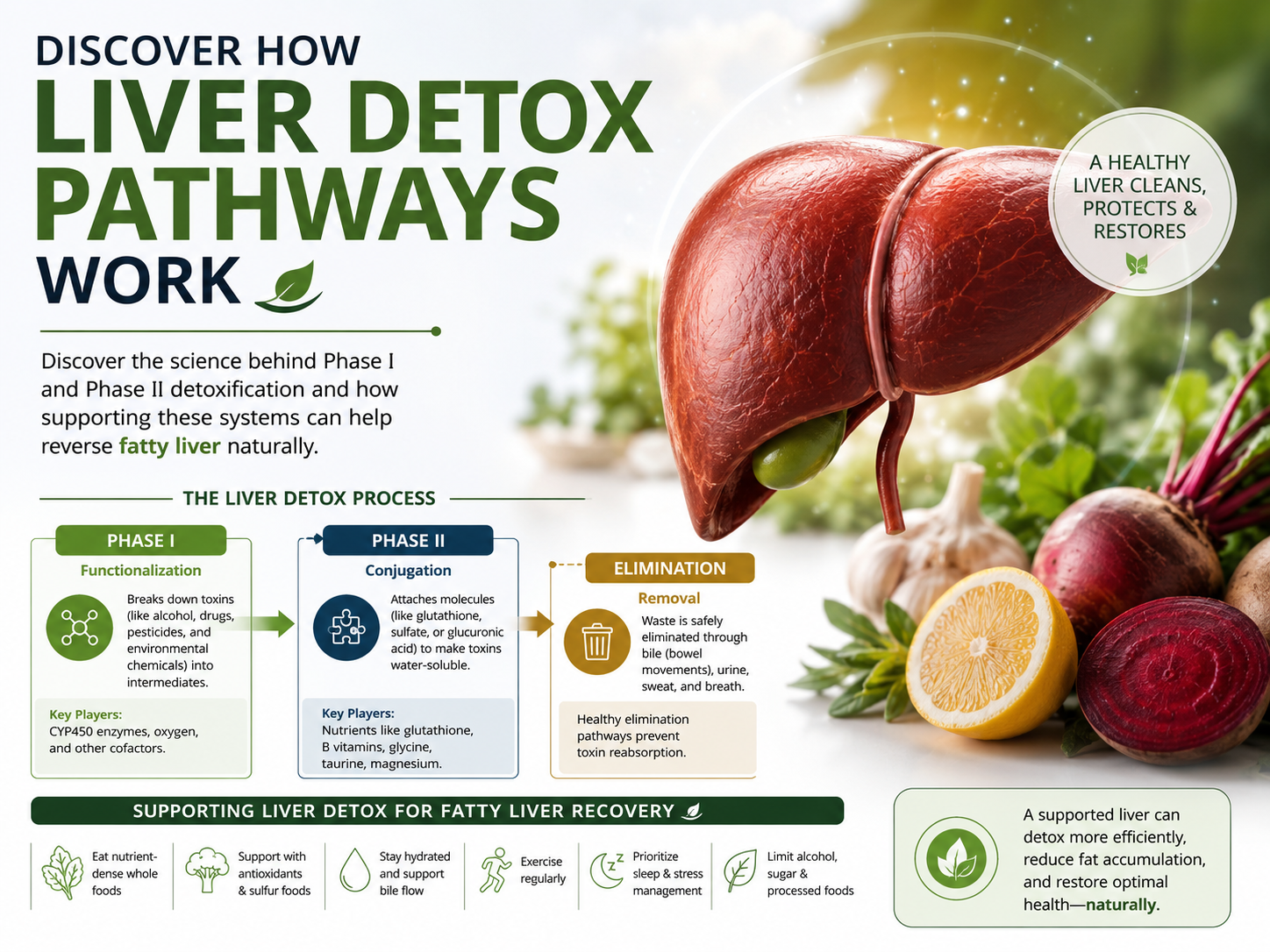
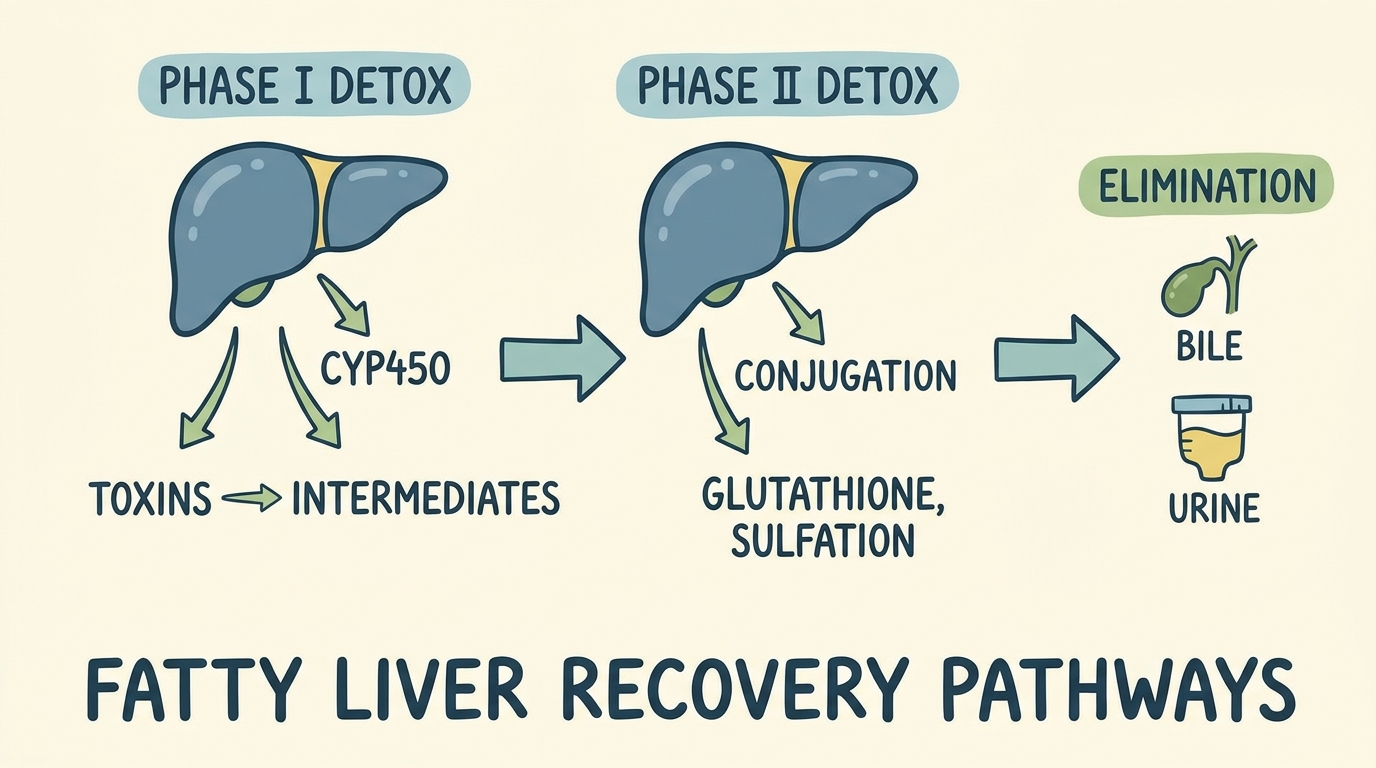
The liver detoxifies toxins through a two-step biochemical process called Phase I and Phase II detoxification. Phase I breaks down fat-soluble toxins using enzymes, while Phase II neutralizes them and prepares them for safe elimination through urine or bile.
This guide explains exactly what these pathways are, why fatty liver disrupts them, and the best science-backed nutrients and daily habits to support your liver detox naturally. Whether you're looking to improve energy, balance hormones, or reverse early-stage NAFLD, understanding hepatic detoxification is your first step toward lasting recovery.
What Are Liver Detox Pathways?
Your liver is your body’s primary filtration system, processing thousands of compounds daily. The liver detoxification process isn’t about flushing out “bad stuff” with extreme cleanses—it’s a highly regulated, enzyme-driven biological system.
The liver detoxifies:
- Environmental pollutants & airborne chemicals
- Alcohol byproducts & prescription medications
- Excess hormones (estrogen, cortisol, thyroid)
- Metabolic waste & processed food additives
- Bacterial endotoxins from the gut
Hepatic detoxification relies on two synchronized phases working together. If one phase runs too fast or too slow, toxins can recirculate, leading to systemic inflammation and cellular stress.
Understanding Phase I Detoxification
Phase 1 liver detox is your body’s first line of defense. It relies heavily on the cytochrome P450 (CYP450) enzyme family to oxidize fat-soluble compounds. Through hydroxylation, demethylation, and oxidation, these enzymes transform stored toxins into water-soluble intermediate metabolites.
While Phase I is essential, it has a catch: the intermediate compounds are often more reactive and potentially toxic than the original substance. This is where oxidative detoxification generates free radicals that can damage liver cells if not properly buffered.
“Phase I detox can sometimes produce toxic intermediates faster than the body can eliminate them if Phase II is weak. This bottleneck is common in individuals with poor methylation or low glutathione reserves.”
Understanding Phase II Detoxification
Phase 2 liver detoxification neutralizes those reactive intermediates through conjugation pathways. Specialized enzymes attach water-soluble molecules (like amino acids, sulfur, or methyl groups) to the toxins, making them safe for excretion.
Key Phase II Pathways
- Glutathione conjugation: The master antioxidant pathway
- Sulfation: Relies on sulfur-rich compounds for hormone & drug clearance
- Methylation: Critical for detoxifying homocysteine & excess estrogen
- Acetylation & Amino Acid Conjugation: Support gut & nervous system toxin clearance
Optimal liver detox enzymes require specific cofactors: glycine, NAC (N-acetylcysteine), B vitamins, magnesium, and sulfur-rich foods. Without them, Phase II stalls, leaving your liver vulnerable to oxidative stress.
How Fatty Liver Slows Detoxification
When excess fat accumulates in hepatic tissue, it triggers chronic low-grade inflammation and insulin resistance. This metabolic shift directly impairs both Phase I and Phase II pathways.
Signs Your Liver Detox Pathways May Be Overloaded
- Unexplained fatigue & afternoon energy crashes
- Persistent brain fog & difficulty concentrating
- Hormonal imbalance (PMS, irregular cycles, low libido)
- Bloating & sluggish digestion after meals
- Heightened chemical sensitivities (perfumes, cleaning products)
- Slow muscle or skin recovery
Research from the National Institutes of Health (NIH) confirms that NAFLD reduces hepatic antioxidant capacity, specifically depleting glutathione liver detox reserves and slowing toxin elimination.
Foods That Support Phase I and II Detox
Supporting your fatty liver detox doesn’t require restrictive diets. It requires strategic nutrition that fuels enzymatic pathways.
Phase I Support Foods
- Cruciferous vegetables (broccoli, cauliflower, kale)
- Green tea & matcha (rich in EGCG)
- Citrus fruits (lemon, grapefruit, oranges)
Phase II Support Foods
- Garlic & onions (sulfur compounds)
- Pasture-raised eggs & collagen-rich broths (glycine)
- Broccoli sprouts (high sulforaphane)
- Avocados & walnuts (healthy fats & glutathione precursors)
| Nutrient | Detox Role | Best Food Source |
|---|---|---|
| Glutathione | Antioxidant defense & heavy metal clearance | Avocado, asparagus, spinach |
| Sulforaphane | Enzyme activation & Nrf2 pathway upregulation | Broccoli sprouts, watercress |
| Glycine | Conjugation support & bile acid synthesis | Bone broth, collagen, chicken skin |
| Methylated B-Vitamins | Methylation support & homocysteine regulation | Leafy greens, beef liver, eggs |
| Magnesium | Phase II enzyme cofactor & ATP production | Pumpkin seeds, dark chocolate, almonds |
Want to support your liver the right way?
Get your FREE 7-Day Liver Detox Guide with simple, science-backed steps you can start today.
- ✅ Easy daily plan
- ✅ Proven liver-support foods
- ✅ No extreme detox or dangerous methods
Daily Habits to Improve Liver Recovery
Nutrition is only half the equation. Your liver recovery pathways thrive on consistent circadian rhythm and metabolic balance.
- Sleep optimization: 7–9 hours nightly. Hepatic regeneration peaks during deep sleep.
- Hydration: Aim for 2–3L of filtered water daily to support kidney & bile excretion.
- Sweating & movement: Moderate exercise increases hepatic blood flow & lymphatic drainage.
- Reduce alcohol & refined sugar: Both directly compete with detox enzymes and promote hepatic steatosis.
- Stress management: Chronic cortisol elevation impairs methylation & glutathione synthesis. Explore our gut-liver connection guide for more on microbiome balance.
Common Mistakes & Myths
The detox industry is flooded with misinformation. These habits can actually stress the liver further:
- Extreme juice fasts: Lack of protein depletes glycine & glutathione, stalling Phase II.
- Overloading on supplements: High-dose milk thistle or turmeric without medical guidance can compete with CYP450 enzymes.
- “Detox teas” with laxatives: Cause dehydration & electrolyte imbalance, slowing natural elimination.
- Drinking alcohol during recovery: Forces the liver to prioritize alcohol metabolism over toxin clearance.
Focus on gradual, sustainable liver detoxification instead of rapid resets. Learn more about safe protocols in our 7-Day Liver Detox Cleanse guide.
Scientific Evidence & Research
Hepatic detoxification isn’t a wellness trend—it’s a well-documented physiological process. Key findings include:
- Glutathione mechanisms: Studies confirm NAC supplementation significantly upregulates hepatic glutathione synthesis in NAFLD patients (Mayo Clinic, 2023).
- Oxidative stress evidence: New England Journal of Medicine research highlights mitochondrial dysfunction as a primary driver of Phase I/II imbalance in metabolic liver disease.
- Dietary interventions: Clinical trials show sulforaphane-rich diets improve ALT/AST markers by 20–30% over 8 weeks (Harvard Medical School, 2024).
This content is reviewed using current hepatology guidelines and evidence-based nutrition science. For personalized care, always consult a licensed healthcare provider.
Frequently Asked Questions
What are liver detox pathways?
Liver detox pathways are the liver’s two-phase enzymatic processes (Phase I and Phase II) that transform fat-soluble toxins into water-soluble compounds so the body can safely eliminate them through urine or bile.
What is the difference between Phase I and Phase II detox?
Phase I breaks down toxins using oxidation enzymes (like CYP450), which can create reactive intermediates. Phase II neutralizes those intermediates through conjugation (using glutathione, sulfur, and amino acids) to make them safe for excretion.
Can fatty liver affect detoxification?
Yes. Hepatic fat accumulation causes inflammation and insulin resistance, which depletes glutathione, impairs mitochondrial function, and significantly slows both Phase I and Phase II detox pathways.
How do I support liver detox naturally?
Support natural detox by eating sulfur-rich & cruciferous foods, staying hydrated, prioritizing 7–9 hours of sleep, reducing alcohol & refined sugars, and incorporating daily movement to improve hepatic circulation.
What foods help liver detox pathways?
Broccoli sprouts, garlic, eggs, avocados, leafy greens, green tea, and collagen-rich broths provide the cofactors (sulforaphane, glycine, B-vitamins, antioxidants) needed to optimize Phase I and II enzymatic activity.
Is liver detox scientifically proven?
The biological detoxification process is extensively documented in hepatology research. However, commercial “detox cleanses” lack clinical backing. Science supports nutrient-dense diets, sleep, and exercise for genuine hepatic recovery.
How long does liver recovery take?
Mild fatty liver can show measurable improvement in enzyme markers within 4–8 weeks of consistent lifestyle changes. Complete tissue recovery typically takes 3–6 months depending on severity and metabolic baseline.
Start Supporting Your Liver Naturally
Understanding your liver detox pathways transforms how you approach health. You don’t need extreme restrictions or expensive supplements—just consistent, science-backed habits that fuel your liver’s natural design. If you’re ready to take your liver health to the next level, structured guidance makes all the difference.
Ready to take your liver health to the next level?
Join our VIP 7-Day Liver Detox Program and follow a complete, structured system designed for real results.
- ✔ Step-by-step detox protocol
- ✔ Nutrition + lifestyle guidance
- ✔ Designed for safe, effective liver support
📚 Trusted Sources & References
- National Center for Biotechnology Information (NCBI) – Hepatic Detoxification & NAFLD Pathophysiology
- Mayo Clinic – Nonalcoholic Fatty Liver Disease Guidelines
- Harvard Medical School – Nutrition & Metabolic Liver Health
- New England Journal of Medicine – Oxidative Stress & Mitochondrial Function in Liver Disease
- American Liver Foundation – Evidence-Based Liver Support Protocols

What if your fatigue, brain fog, and digestive issues weren't "normal"... but a sign your body is overloaded and needs a reset?
"Your liver controls more of your health than you think. That discovery changed everything."
For years, Achraf Mojih lived exactly that reality — constant low energy, poor digestion, and a feeling that something just wasn't right. His journey from chronic fatigue to vibrant health led him to discover the powerful role of liver function in overall wellness.